Cancer Research with Associated Adypocytes
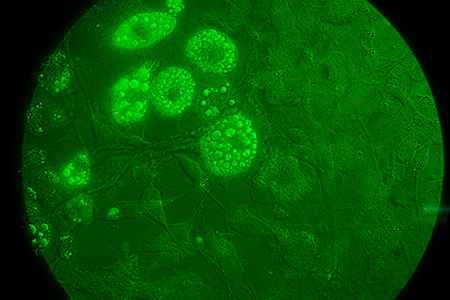
The most commonly diagnosed cancers are found in the chest, abdominal, and thoracic cavities, which are all rich in adipose tissue. Adipose tissue is made up of a network of vasculature, connective tissue, and adipocytes. Fat is stored in adipocytes as triglycerides, which are molecules consisting of three fatty acyl chains each bonded through an ester linkage to glycerol. Adipocytes have been observed to play a role in tumor progression through the establishment of cellular cross talk with tumor cells inside the tumor microenvironment. As a result of this cellular cross talk, adipocytes undergo a phenotypic change as the tumor cells progress and invade tumor surrounding-adipose tissue. The adipocytes release stored fat as fatty acids during delipidation; these free fatty acids are then available for use by the adjacent cancer cells. The cancer cells uptake these fatty acids and repurpose them for use in newly formed cancer cells. Specific fatty acids have been shown to have varying effects on cancer. It is believed that oleic acid can prevent cancer from progressing while linoleic acid can promote cancer progression, however, these findings are currently being debated.
To make a definitive claim as to the function of these fatty acids, single cell analysis of these cancer cells is necessary. Currently, our lab is evaluating single cell lipid profiles and fatty acid compositions in cancerous breast tissue and adjacent healthy tissue through nano-spray ionization-mass spectrometry (NSI-MS) following nanomanipulation.